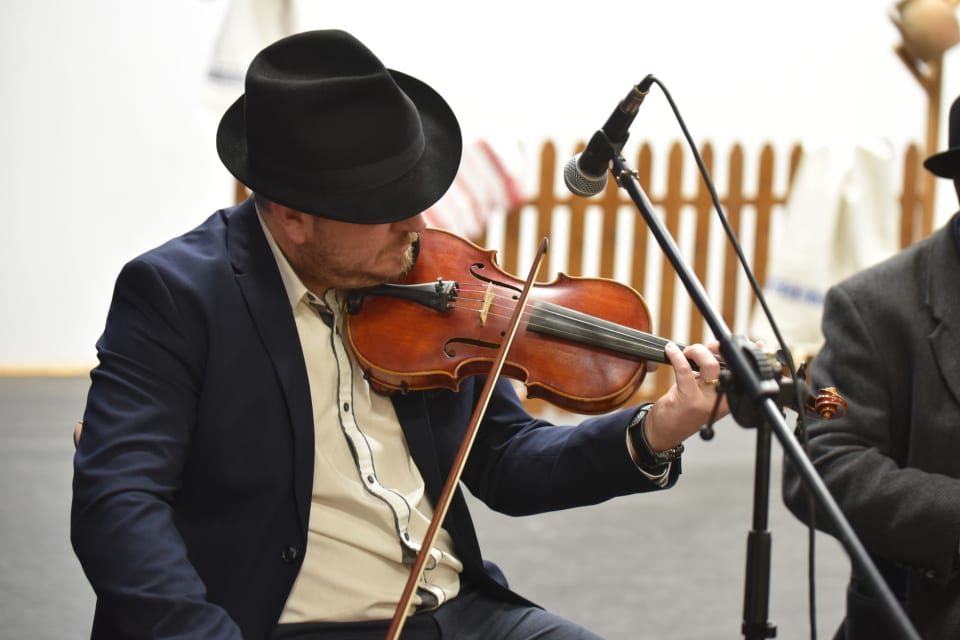


Klezmer is the traditional instrumental music of Ashkenazi (Eastern European) Jews, which for centuries sounded at weddings and celebrations. It was performed by wandering musicians — klezmorim — on fiddle, clarinet, tsymbaly, and double bass. A hallmark of the style is its extraordinary expressiveness, when the instrument seems to imitate the human voice: it “laughs,” “weeps,” sighs, and moans.
Klezmer developed in the lands of Ukraine too, interacting closely with Ukrainian folk music — the two traditions enriched one another over centuries of shared neighbourhood. Its characteristic features are “weeping” glissandos, ornamentation, and specific modes with augmented seconds. In the 20th century klezmer declined, but at the end of the century it underwent a vigorous worldwide revival. Today it is a bright, recognizable voice of the centuries-old cultural heritage of Central and Eastern Europe.