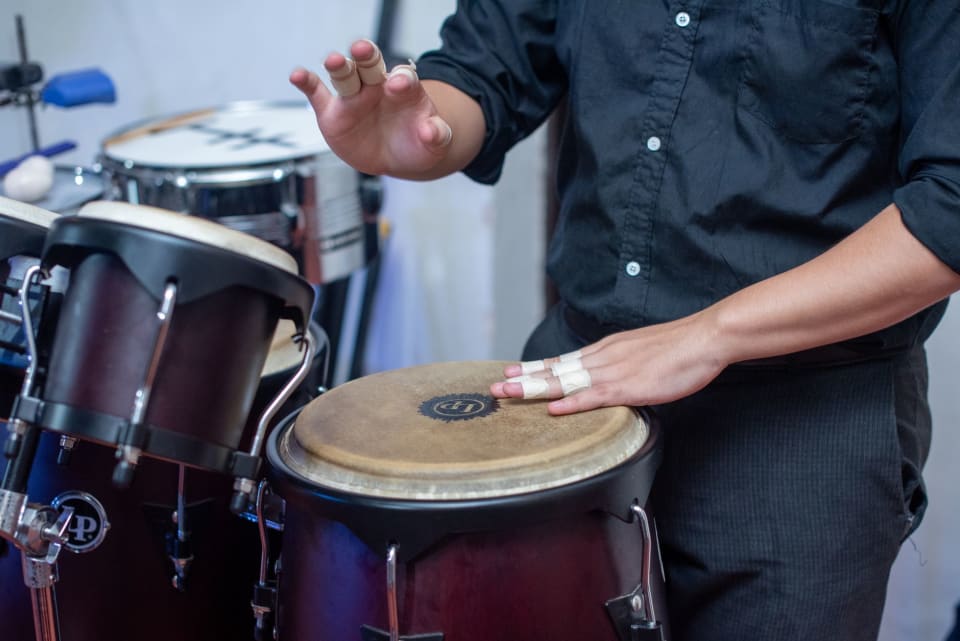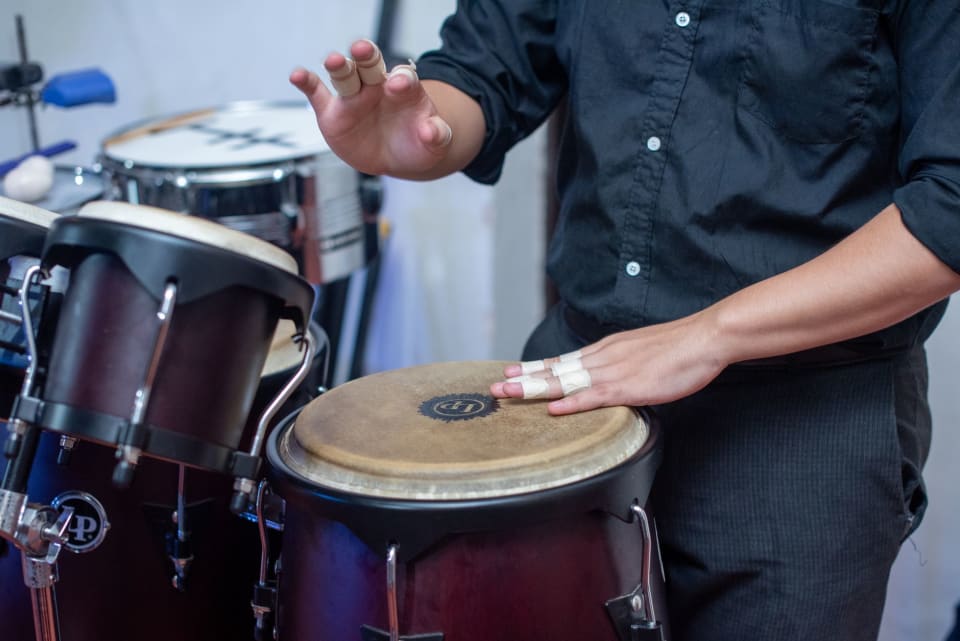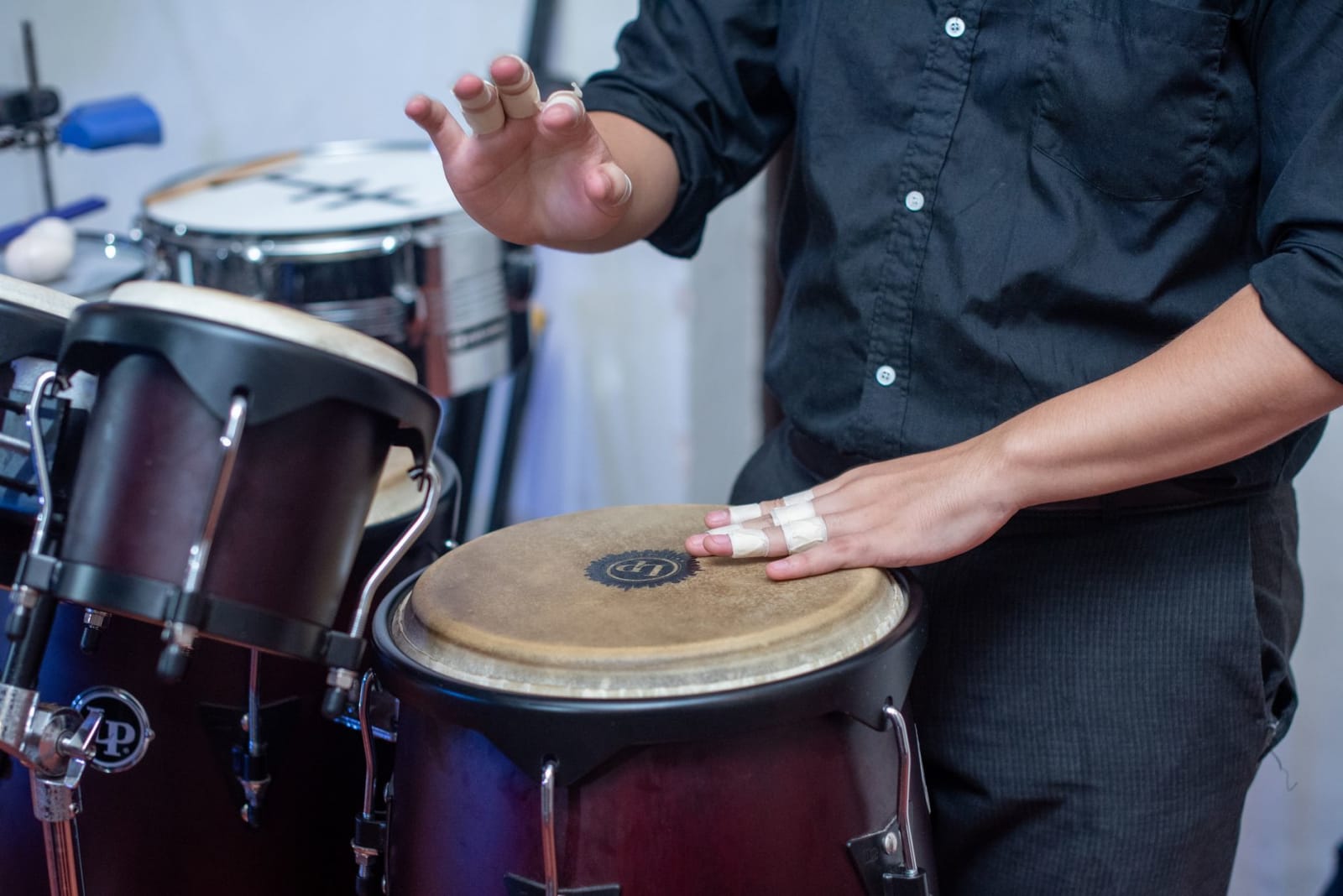
The conga arose in Cuba in the 19th century as a synthesis of African drums brought by slaves from the Congo (hence the name) and local Cuban traditions. The conga descends from Congolese (Bantu) makuta and yuka drums as well as bembé drums, and later became the heart of secular music: rumba, son, and then mambo and salsa.
The modern conga stands 75 cm tall, with a body of staves of mahogany or maple and a single head of calfskin or synthetic skin. In a standard ensemble, three sizes are played: quinto (smallest, highest), conga (middle), and tumba (largest, lowest).
The playing technique is an art of contrast: open tone (open ringing palm strike on the edge), muff (muted), slap (sharp), bass (center). Conga legends: Mongo Santamaría (pioneer of Latin jazz), Ray Barretto, Tata Güines, Giovanni Hidalgo (modern virtuoso). In Ukraine the conga sounds in jazz big bands of Kyiv and Lviv and in Latin-folk projects.