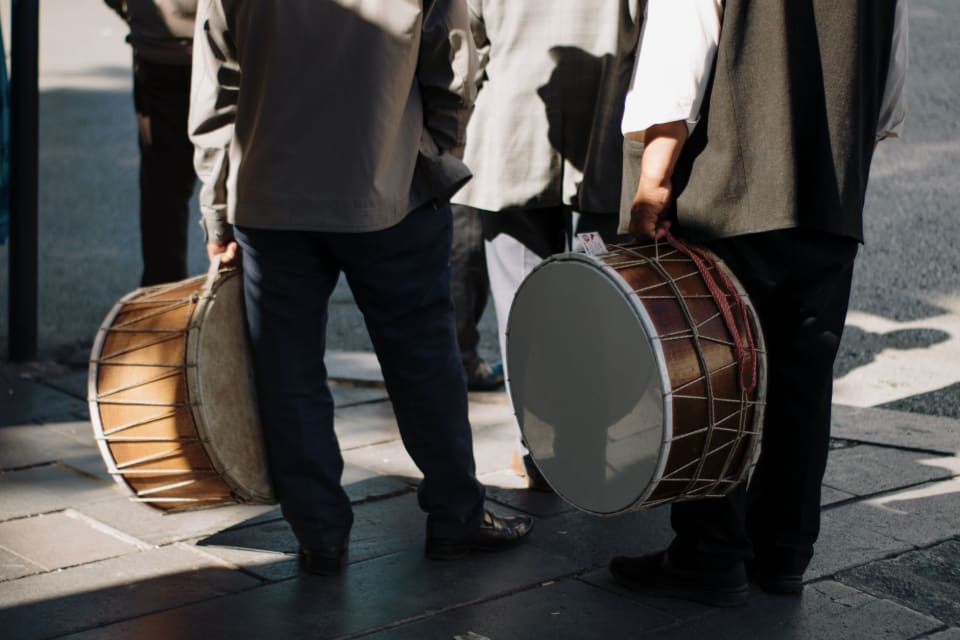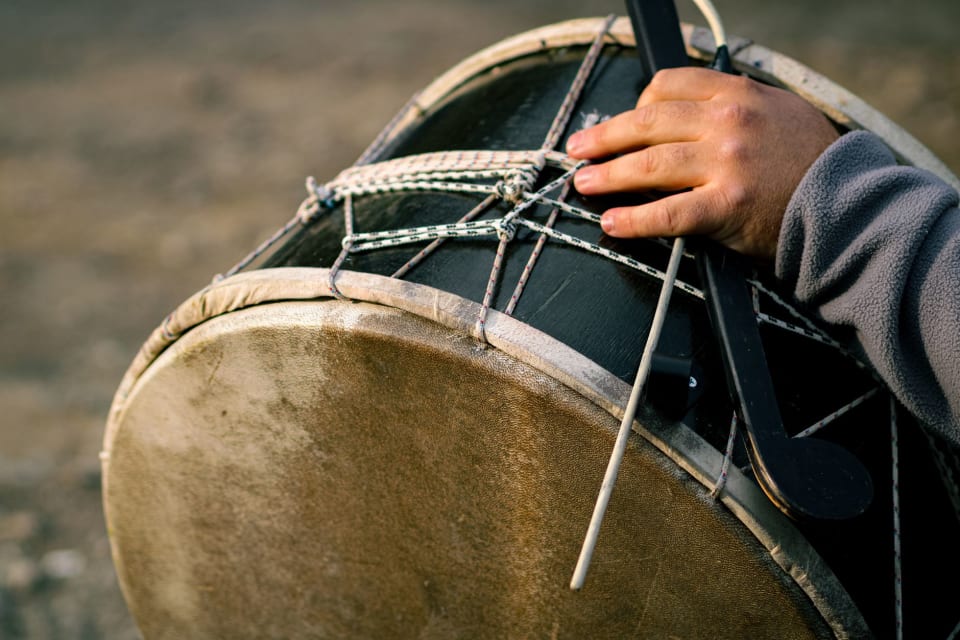


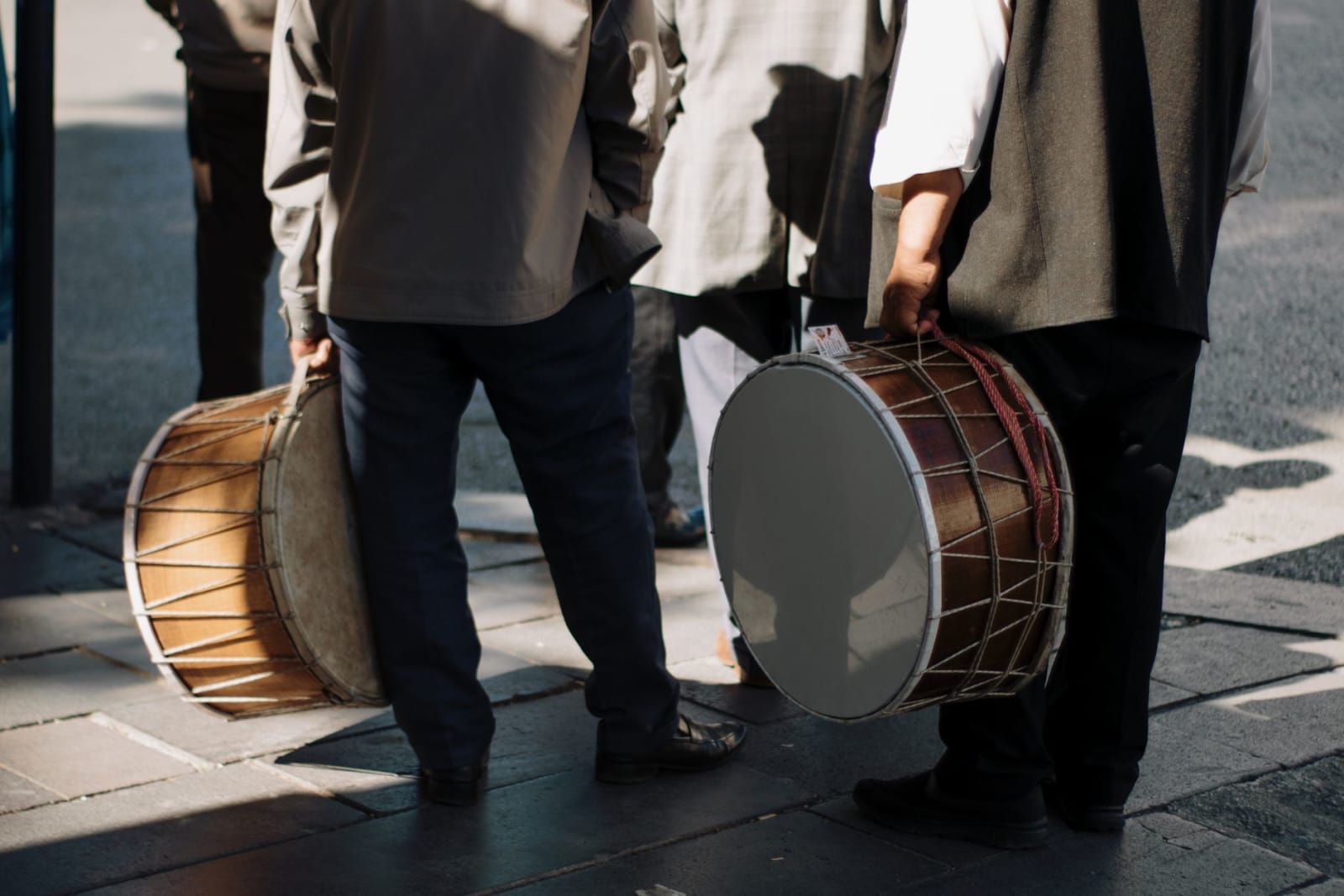
The davul is a large cylindrical drum with two heads, widespread in Turkey, the Balkans, the Caucasus, and the Middle East (where it is known by other names too). It is carried on a strap over the shoulder and played standing or on the move, notably during processions and open-air dances.
A distinctive feature of the playing is its asymmetry: one, thicker head is struck with a large mallet, producing a deep low “boom,” while the other, thinner head is struck with a slender switch, giving a fine, ringing “tap.” This combination of bass and high sound creates the characteristic springy rhythmic pattern. The davul almost always appears in an inseparable pair with the zurna: this loud duo of shawm and drum is the recognisable soundtrack of folk festivals and weddings across a vast expanse from the Balkans to Anatolia.