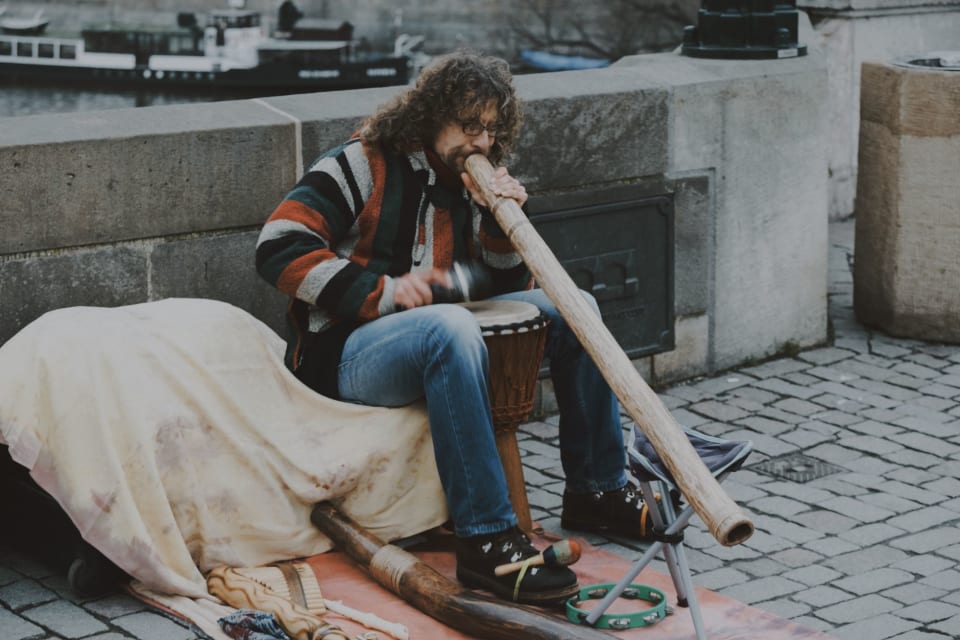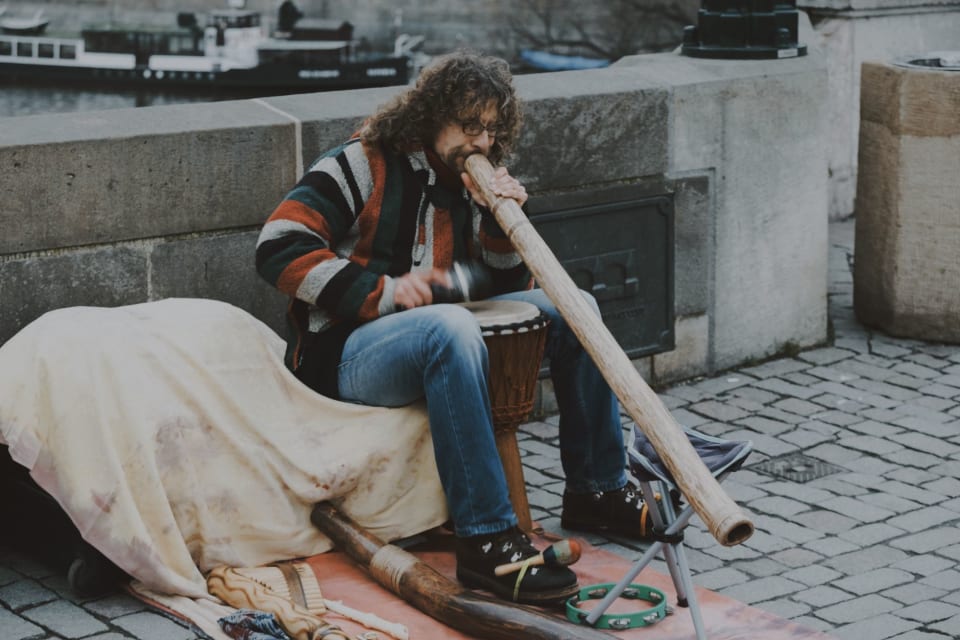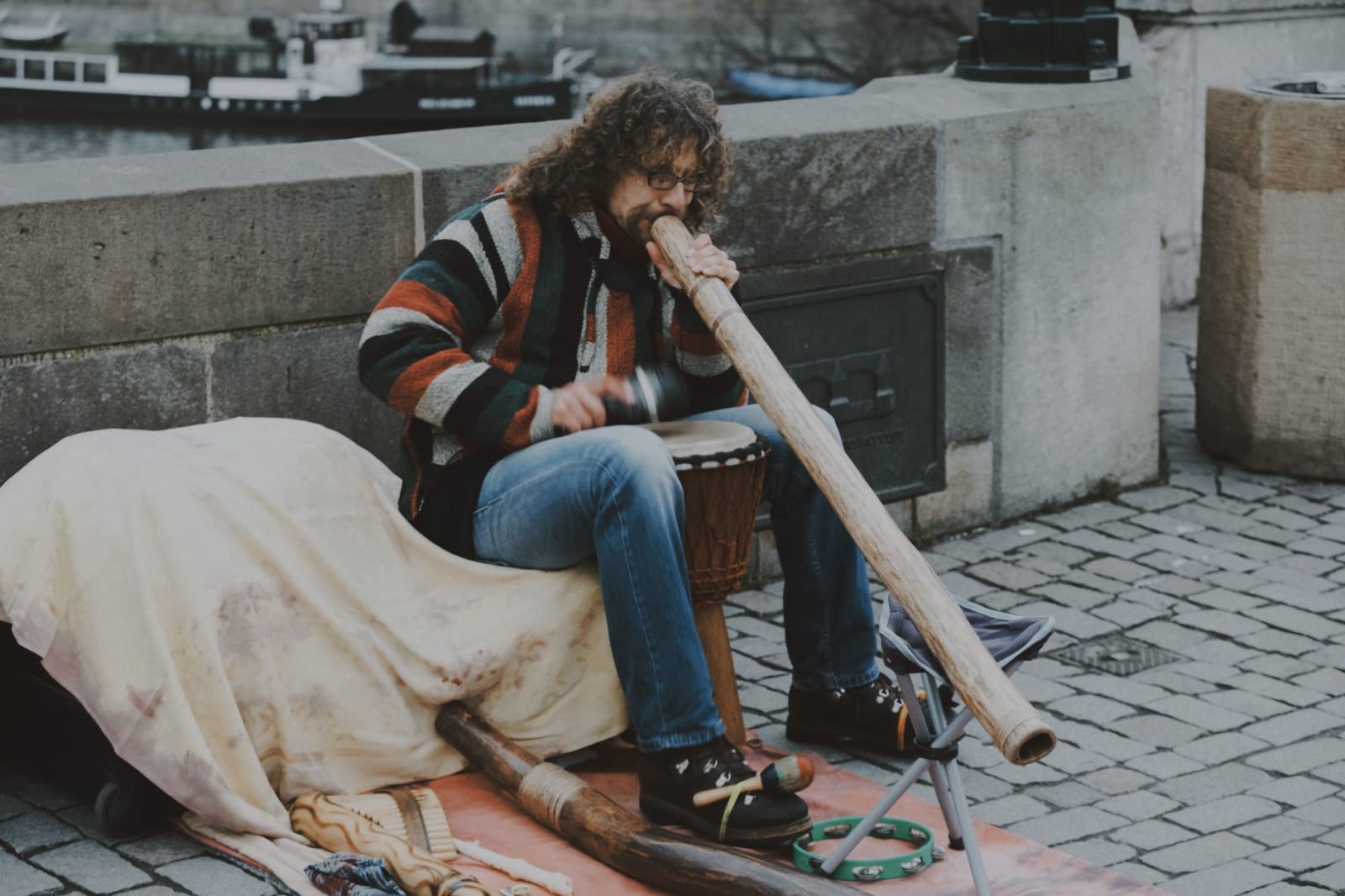
The didgeridoo comes from northern Australia (Arnhem Land), where the Aboriginal Yolngu people call it the yidaki. It is made from a branch of eucalyptus whose core was naturally hollowed out by a termite colony. Length: 1–2 meters; the internal diameter is uneven, which creates the characteristic overtone spectrum.
The main playing technique is circular breathing: the performer inhales through the nose while simultaneously pushing air stored in the cheeks out into the instrument, allowing continuous play for tens of minutes. The didgeridoo's sound is deep and low, with imitations of animal cries (kangaroos, dingoes) through tongue and lip articulation.
Aboriginal corroboree (ritual ceremonies) are unthinkable without the didgeridoo — it links the living with the ancestors and the sacred time of creation known as “Dreamtime.” In 20th–21st-century Western music the didgeridoo is used by world-music, ambient, and new-age performers: Steve Roach, Ondřej Smeykal, Dagaz ensemble. Traditionally only Aboriginal men could play the didgeridoo, though those rules have softened today.