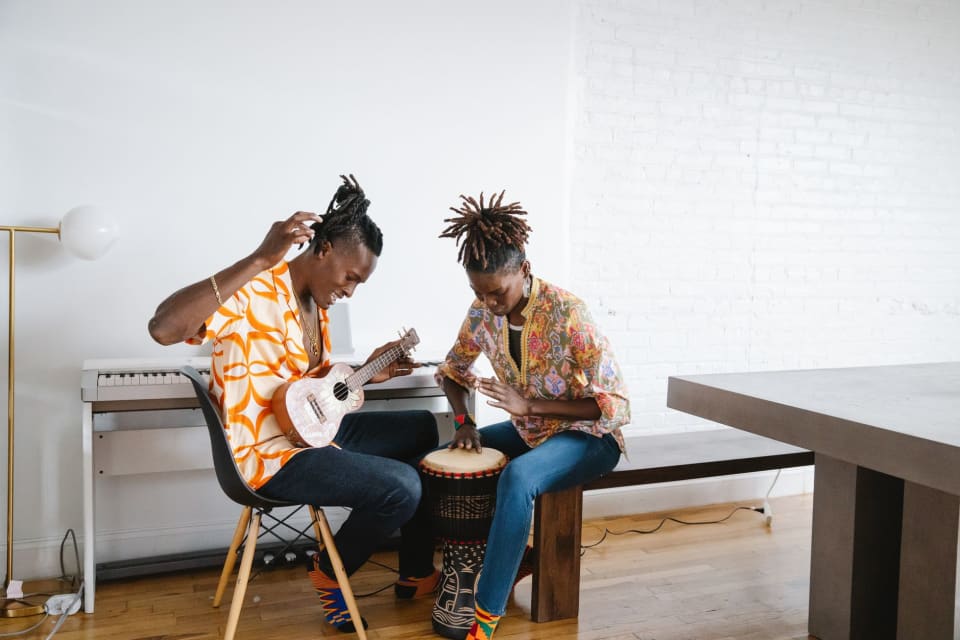
The djembe comes from West Africa — modern Mali, Guinea, Burkina Faso, Côte d'Ivoire. A legend of the Mali Empire (13th century) tells that the djembe was created by the first great blacksmith and given as a gift to the people. The name comes from the Bambara phrase “Anke djé, anke bé” — “everyone gather together in peace.”
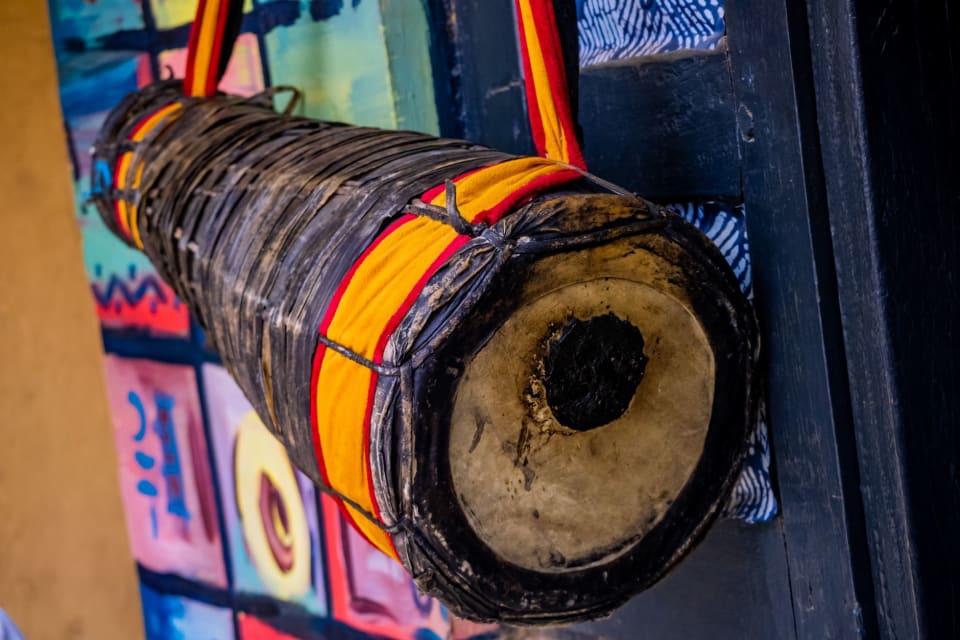
Construction: a single-piece body of hard wood (often lenke or dyala), hollowed into a goblet shape. The top is covered with goatskin tensioned by an intricate rope lacing system. Height: 50–70 cm; top diameter: 25–35 cm.
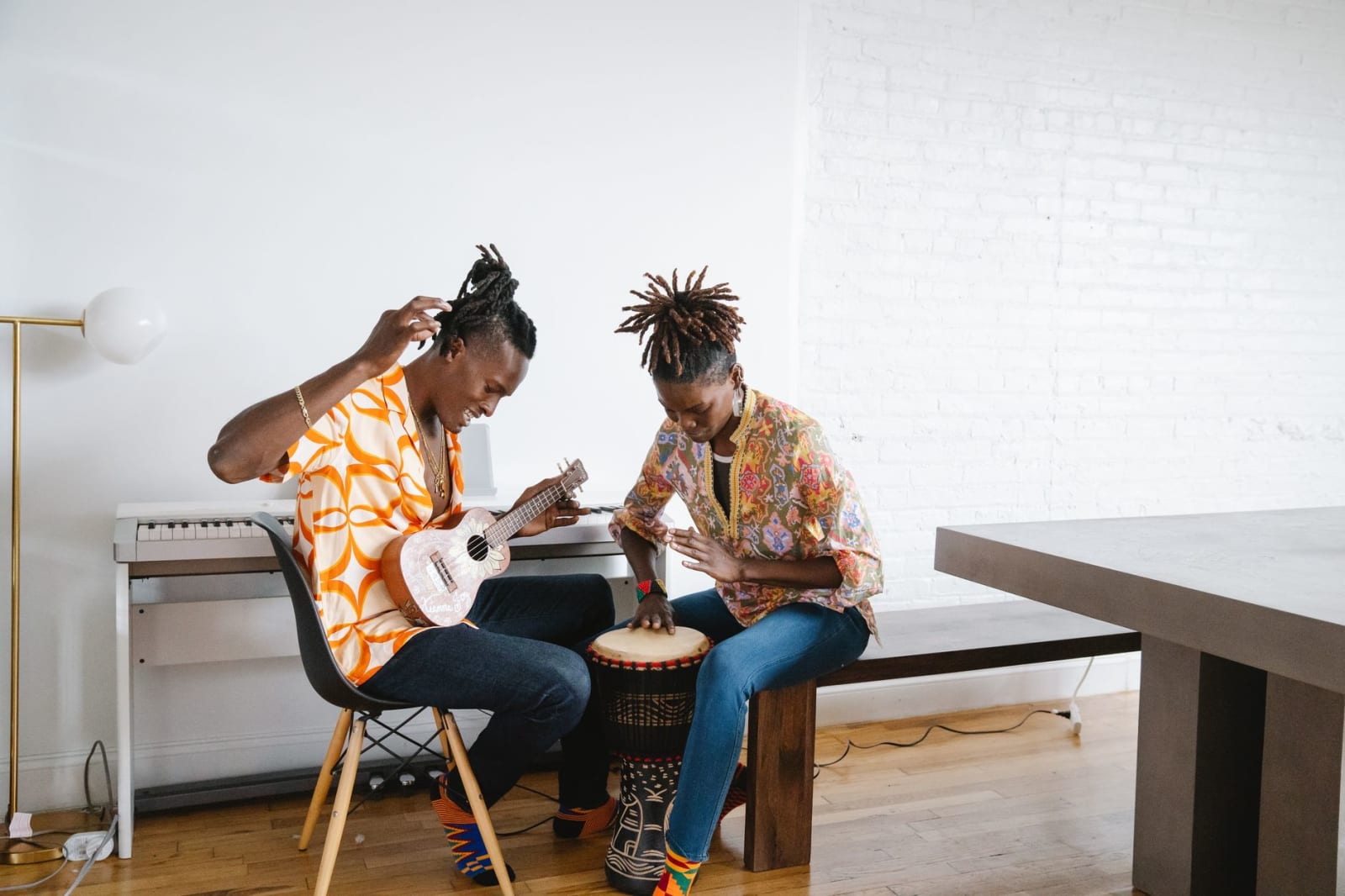
Three principal sounds that create the melody within the rhythm: bass (open palm strike in the center); tone (finger strike at the edge, ringing middle tone); slap (sharp fingertip strike, highest and most piercing). In the Mandinka tradition the djembe accompanies ceremonies — weddings, funerals, initiation rites. The djembe reached world stages first through Fodéba Keïta's Les Ballets Africains (Guinea, 1950s) and, from the 1980s, through the teaching of Mamady Keïta (Guinea); today it is one of the most beloved instruments in world music, drum circles, and yoga studios.