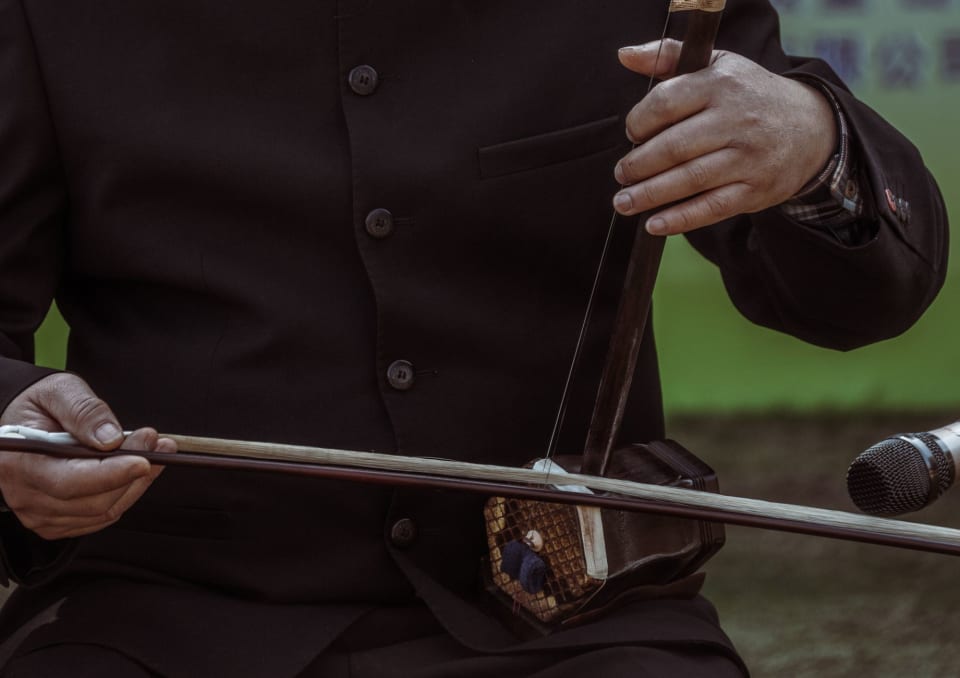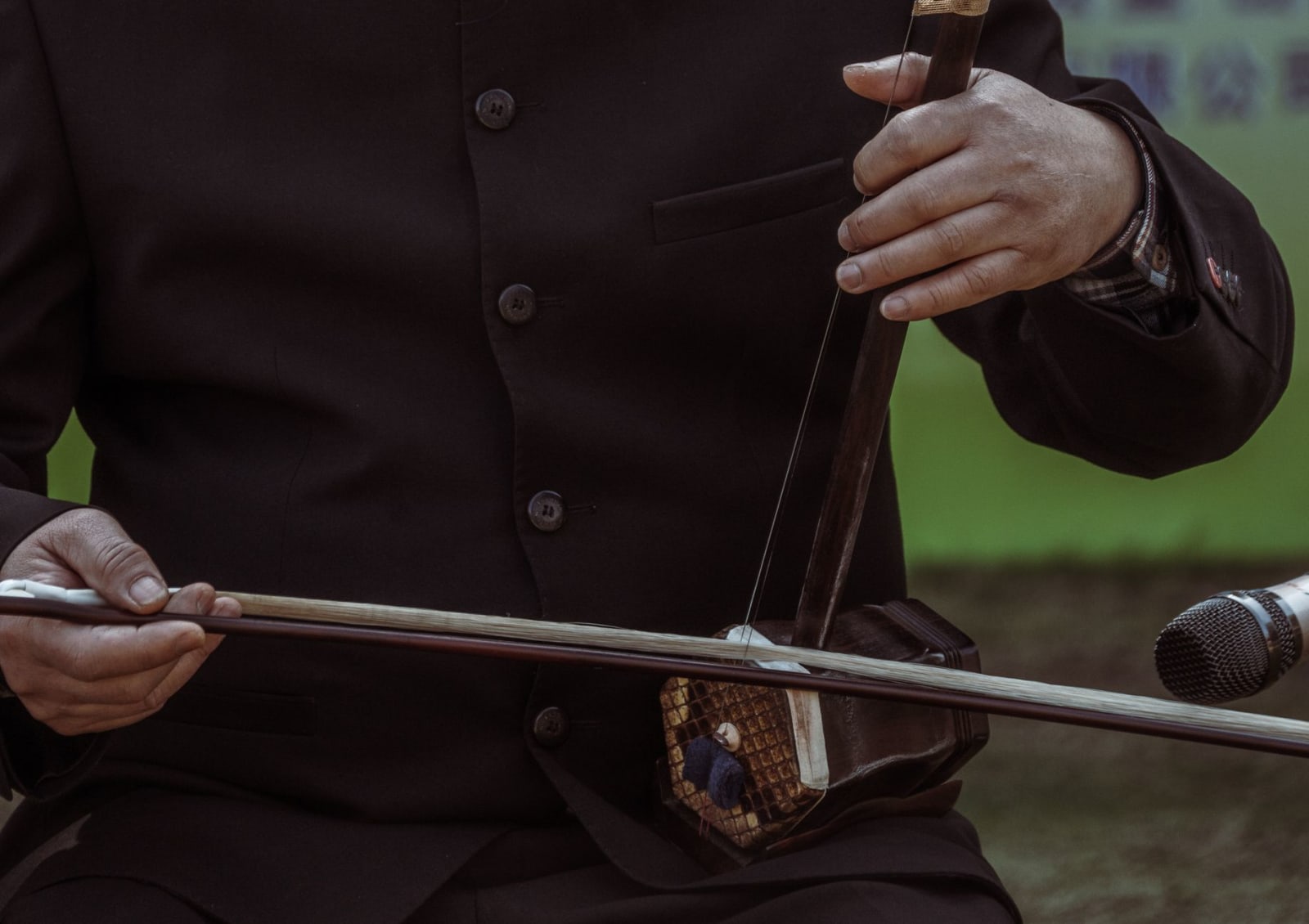
The erhu is a bowed string instrument with a small resonator covered in snakeskin, a long neck, and only two strings. The uniqueness of the playing lies in the fact that the bow hair passes between the strings, and there is no fingerboard — the pitch is determined solely by the pressure of the fingers on the string in the air.
Because of this construction the erhu is capable of astonishingly smooth glissandos, fine vibrato, and “sighs” that make its voice extraordinarily close to human singing. The erhu is one of the principal instruments of Chinese classical and folk music, at once solo and orchestral. Its poignant, lyrical timbre is familiar to the world from many films, and virtuoso pieces for the erhu display the colossal expressive range of this seemingly simple instrument.