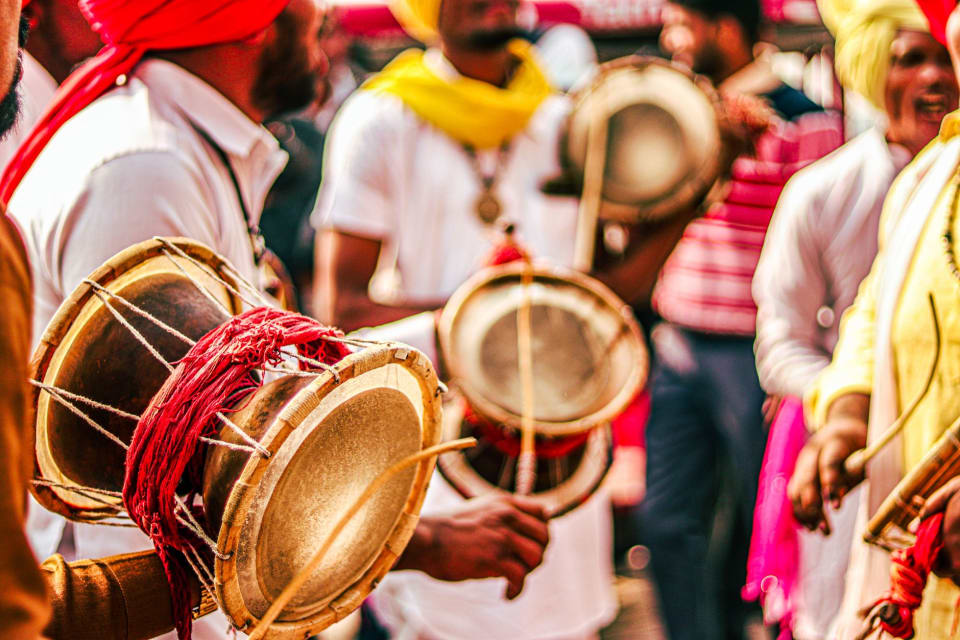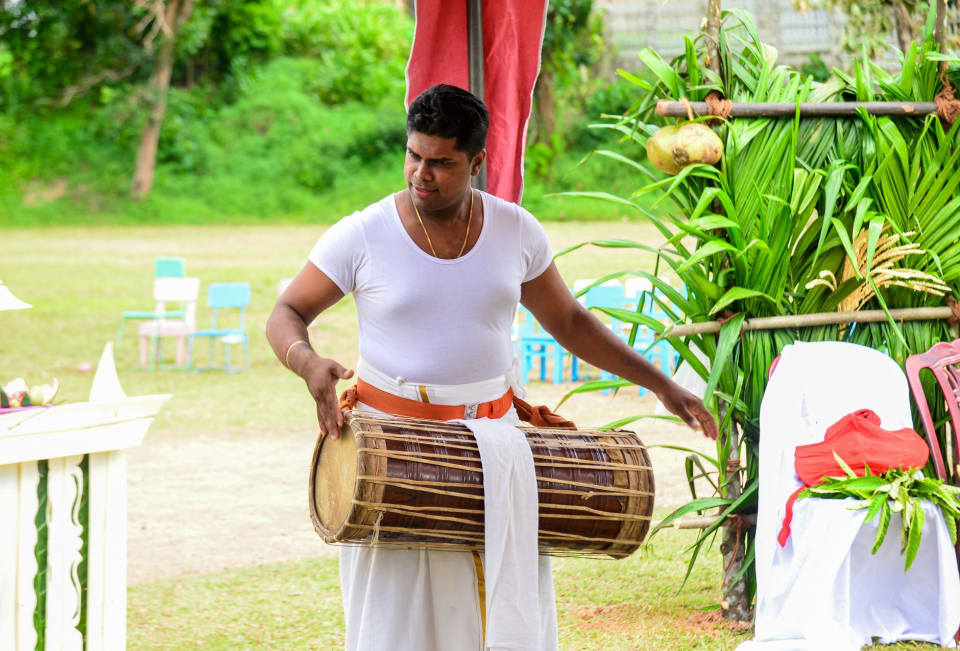
The mridangam is an ancient double-headed barrel-shaped drum, the principal rhythmic instrument of the classical music of South India (the Carnatic tradition). Its body is carved from a single piece of wood, and its two heads of different diameter give sounds of different pitch.
The heads have a complex multi-layered construction, and onto one of them a special black paste is applied, which gives the instrument its inimitable ringing, melodic timbre of definite pitch. The player performs with the fingers and palms of both hands, drawing out an astonishing variety of subtle timbres and extremely complex rhythmic patterns. In Carnatic music the mridangam not only keeps the rhythm but also carries on a lively “dialogue” with the soloist, displaying virtuoso improvisations. It is one of the most revered and technical percussion instruments in the world.