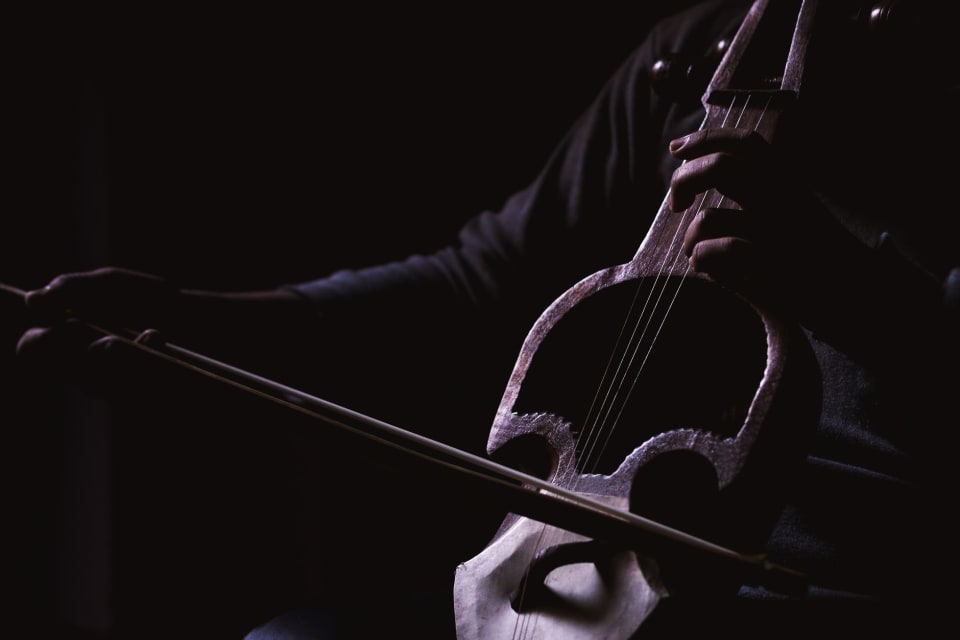



The sarangi is a bowed string instrument, one of the most important in the classical music of North India. It has a short, broad neck, three or four main playing strings, and numerous (up to forty) sympathetic strings that vibrate freely, wrapping the sound in a dense, rich “haze” of overtones.
A distinctive feature of the playing is that the pitch of the strings is changed by touching them not with the pads but with the nails or sides of the fingers. The sarangi is famed for its incredibly expressive, mournful timbre, considered the closest to the human voice of all the instruments in the world, so it was traditionally used to accompany singing and the classical dance kathak. Mastering the sarangi is extraordinarily difficult, so today it is a rare and especially revered art that conveys the finest shades of the Indian raga modes.