Skip to content
PLAY UKRAINE MUSIC — Digital Philharmonic
Sitar
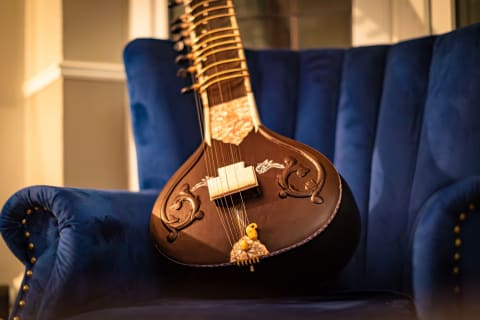
Author: Ar kay. License: Pexels License — https://www.pexels.com/license/. Source

Sitar

Сітар

Audio: Sitar

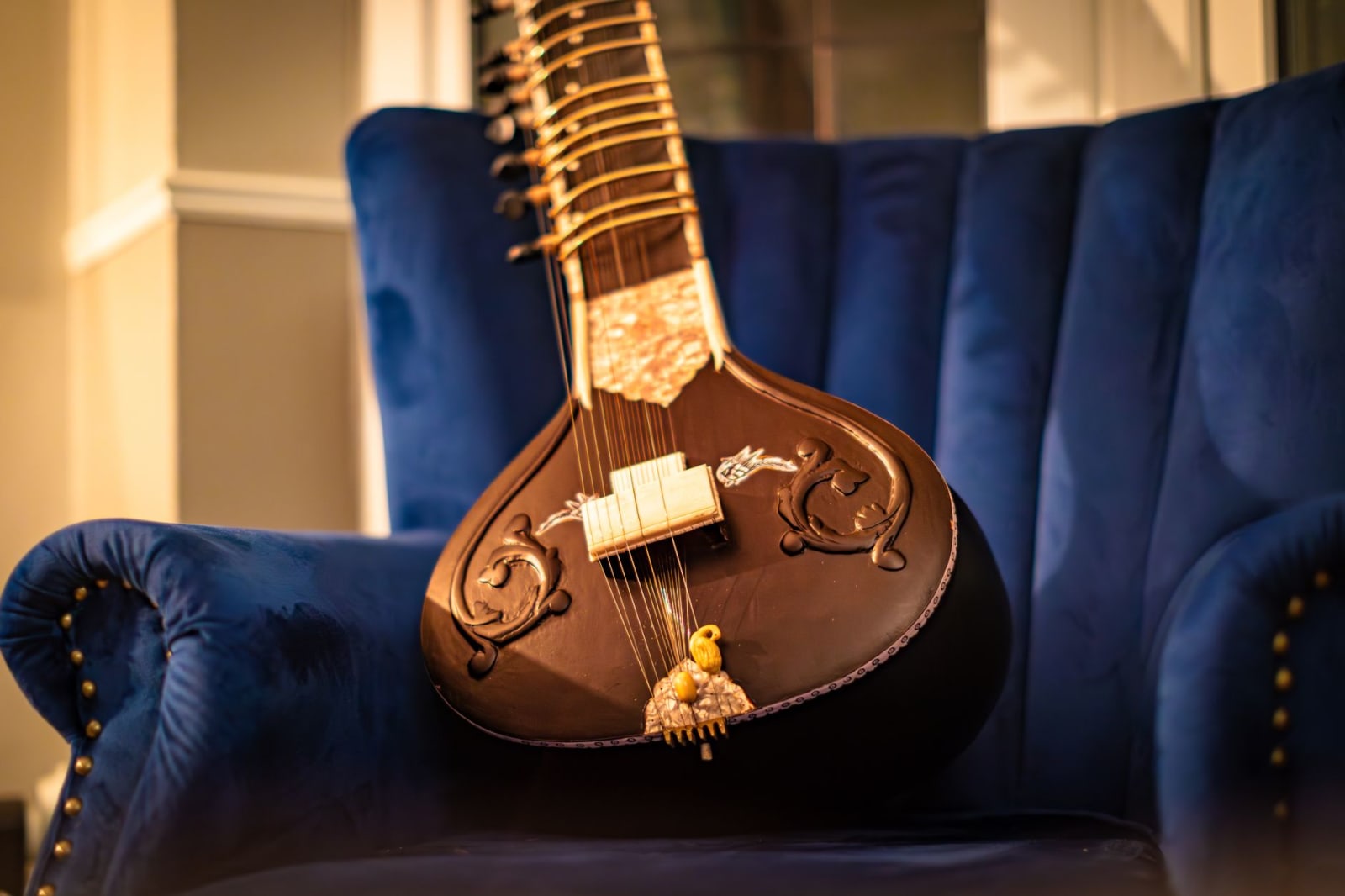
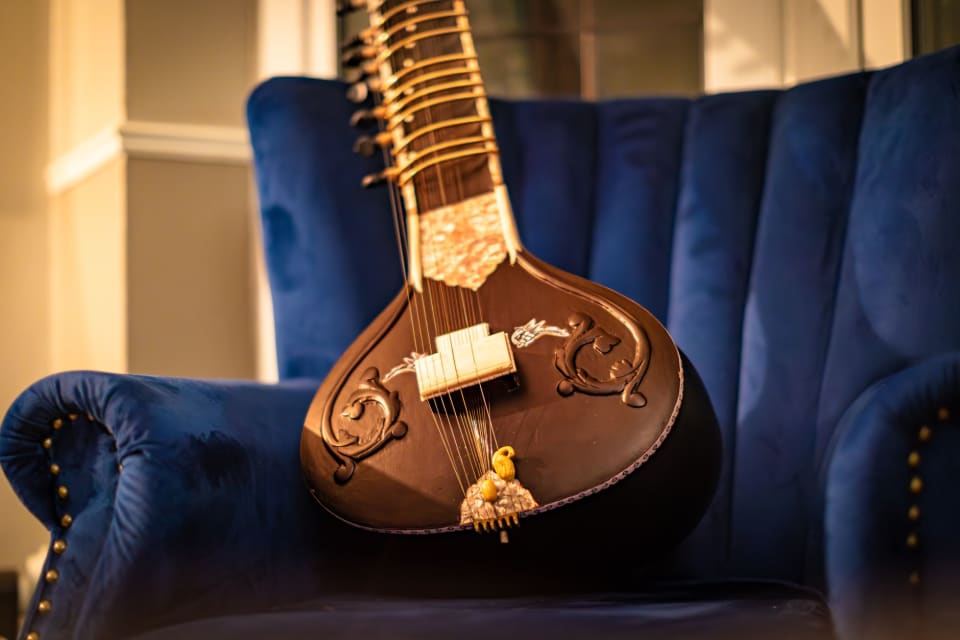
The sitar is an Indian plucked string instrument with a long neck and 18–21 strings (11–13 of them sympathetic resonance strings). The central instrument of North Indian classical music (Hindustani).

The sitar took shape in India in the 18th century (first mentioned in 1739) on the basis of the Persian setar; legend attributes it to Amir Khusrow (13th century), but scholars reject this. The modern construction: a large gourd resonator at the bottom, a long hollow neck (1 meter), 6–7 main strings + 11–13 sympathetic strings (taraf) running beneath the main ones.

Its main feature is the signature “floating” sound, created by the unique fret (parda) design: each fret is arched, allowing the performer to “pull” the string sideways, changing pitch by quarter-tones and more — this is the hallmark Indian microtonal style. The sympathetic strings, never touched by the fingers, create an ever-present overtone cloud that “colors” every note.

The peak of classical sitar is Ravi Shankar (1920–2012), who introduced Indian classical music to the Western world. George Harrison (The Beatles) first used the sitar on Norwegian Wood (1965) and, after meeting Ravi Shankar in 1966 and studying with him, on Within You Without You. Ravi Shankar's daughter Anoushka Shankar continues the tradition. In Ukraine the sitar can be heard at Indian cultural concerts and in East–West fusion projects.

Historical artifact

Sitar
Ar kay · Pexels License — https://www.pexels.com/license/ · Source

Modern incarnation

Sitar
Abhyuday Majhi · Pexels License — https://www.pexels.com/license/ · Source
Video: Sitar

Cultural Versus

Historical: Sitar
Ar kay · Pexels License — https://www.pexels.com/license/
Modern: Sitar
Ar kay · Pexels License — https://www.pexels.com/license/

Sitar

Sub-category:
strings

The sitar is an Indian plucked string instrument with a long neck and 18–21 strings (11–13 of them sympathetic resonance strings). The central instrument of North Indian classical music (Hindustani).

Historical: Oboe
Pixabay · Pexels License — https://www.pexels.com/license/
Modern: Oboe
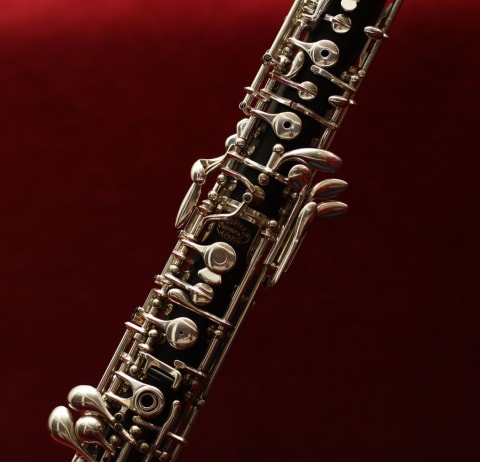
Pixabay · Pexels License — https://www.pexels.com/license/

Oboe

Sub-category:
woodwinds

The oboe is a double-reed woodwind with a characteristic nasal, “Eastern” timbre. It is to the oboe that the orchestra tunes its A.

Related across the platform

Other dimensions of culture

The whole Play Ukraine ecosystem

  • Art
  • Fashion
  • Cuisine
  • Literature
  • Play Ukraine — The whole ecosystem

Test mode: all content on this site is for testing and will be removed at launch.