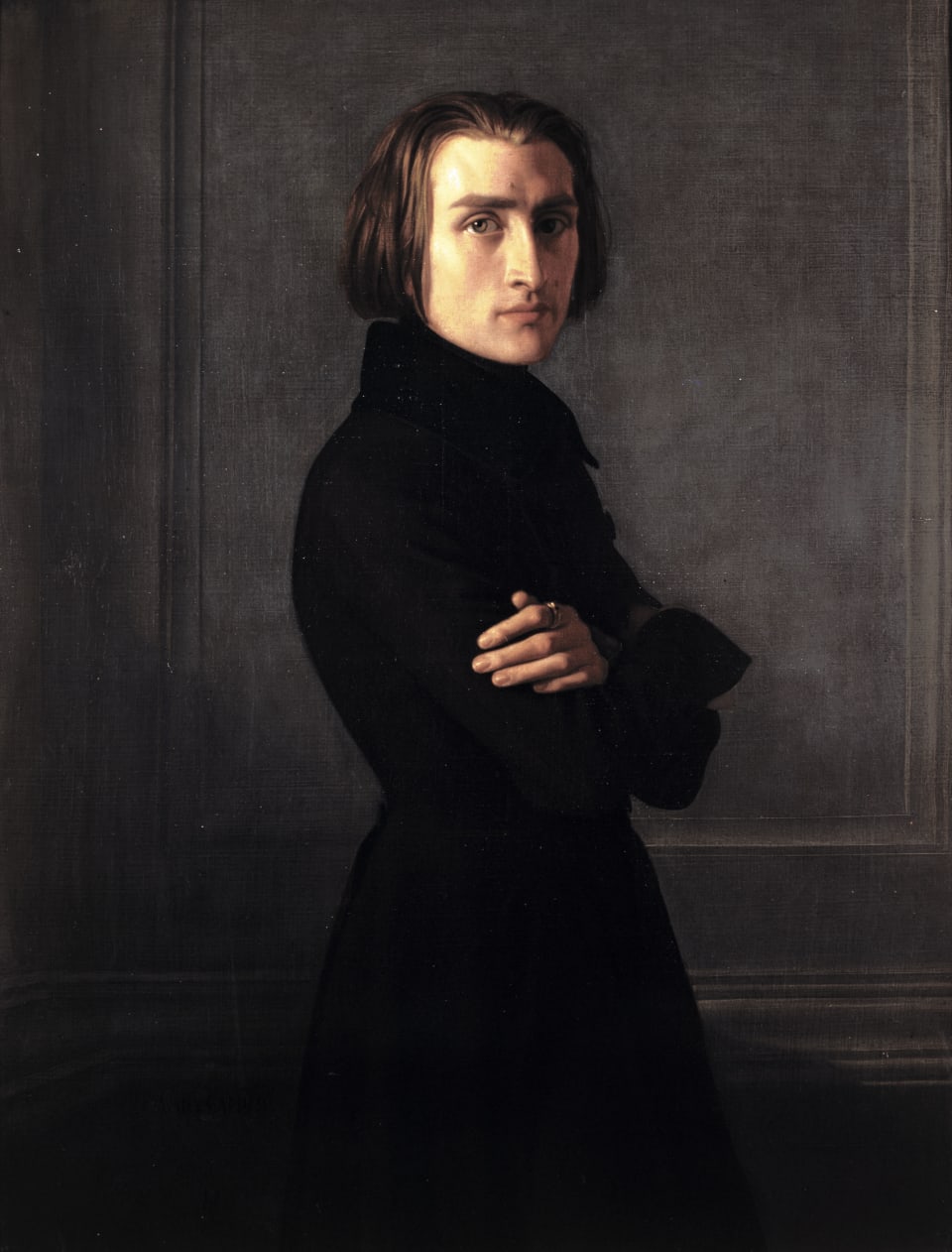
Franz Liszt is a legendary Hungarian pianist and composer, whose virtuosity was so phenomenal that it gave rise to a real “Lisztomania” — a public enthusiasm resembling the modern cult of stars. He expanded the very notion of the possibilities of the piano, turning the instrument into a whole orchestra in the hands of a single performer.
As a composer Liszt was an innovator: he created the genre of the symphonic poem (a single-movement programme work), boldly expanded harmony, and anticipated many discoveries of the 20th century. He composed the “Hungarian Rhapsodies,” the “Transcendental Etudes,” the Sonata in B minor, and sacred works. Liszt was a generous teacher and patron who supported young artists. His figure is the embodiment of the Romantic genius: brilliance, freedom, innovation, and inexhaustible creative energy.