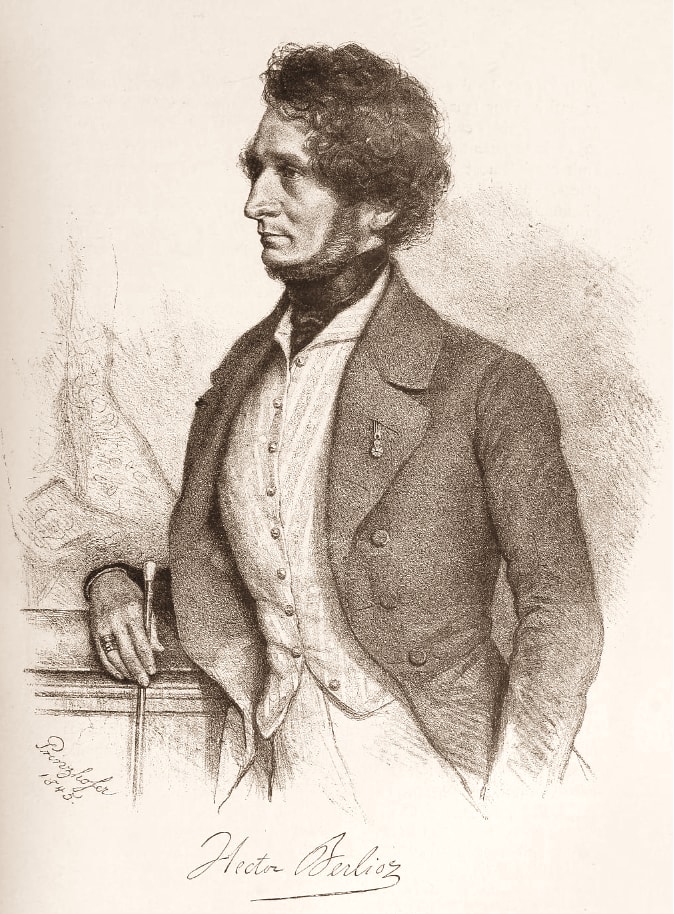



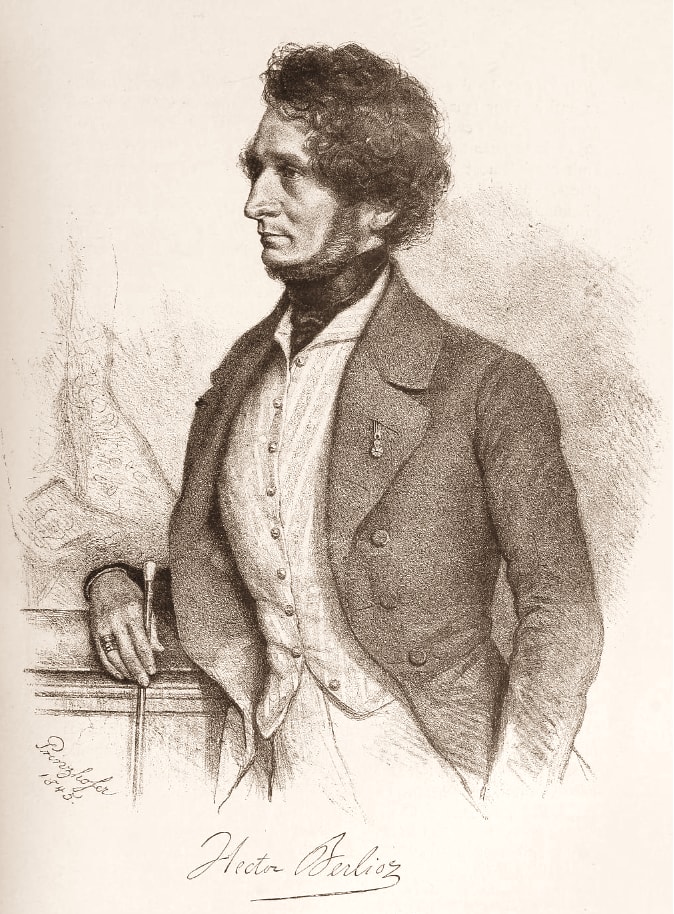
Hector Berlioz (1803–1869) was a French composer, conductor, and music critic, one of the boldest and most original figures of the Romantic era. His creative imagination and innovation were ahead of their time, often baffling his contemporaries.
His most famous work is the “Symphonie fantastique,” a pioneering example of programme music that tells the story of a lovestruck artist through a recurring theme — the “idée fixe.” Berlioz thought on a grand scale and was an unsurpassed master of the orchestra: his “Treatise on Instrumentation” became a reference book for many generations of composers. Among his other works are the dramatic symphony “Roméo et Juliette,” the monumental “Requiem,” and the opera “Les Troyens.” Berlioz forever expanded the notion of the expressive possibilities of the symphony orchestra.