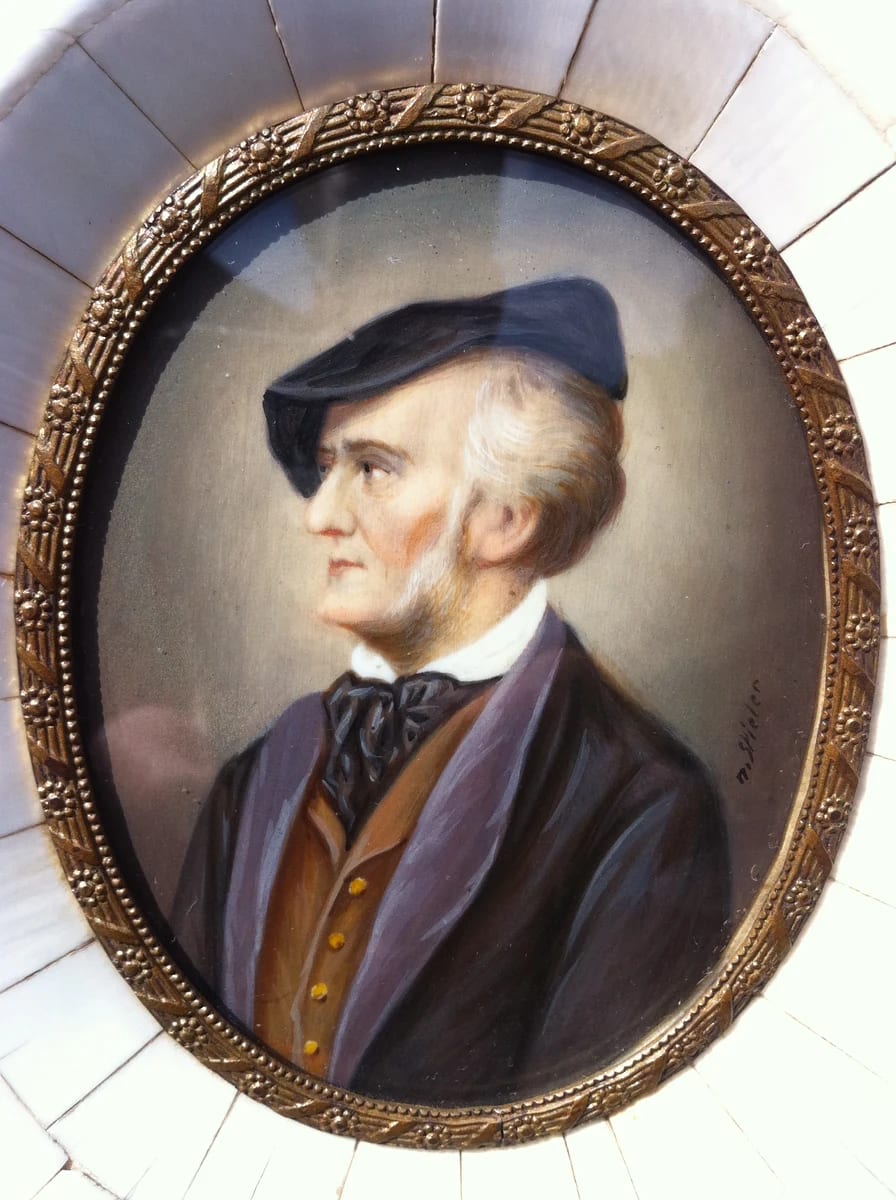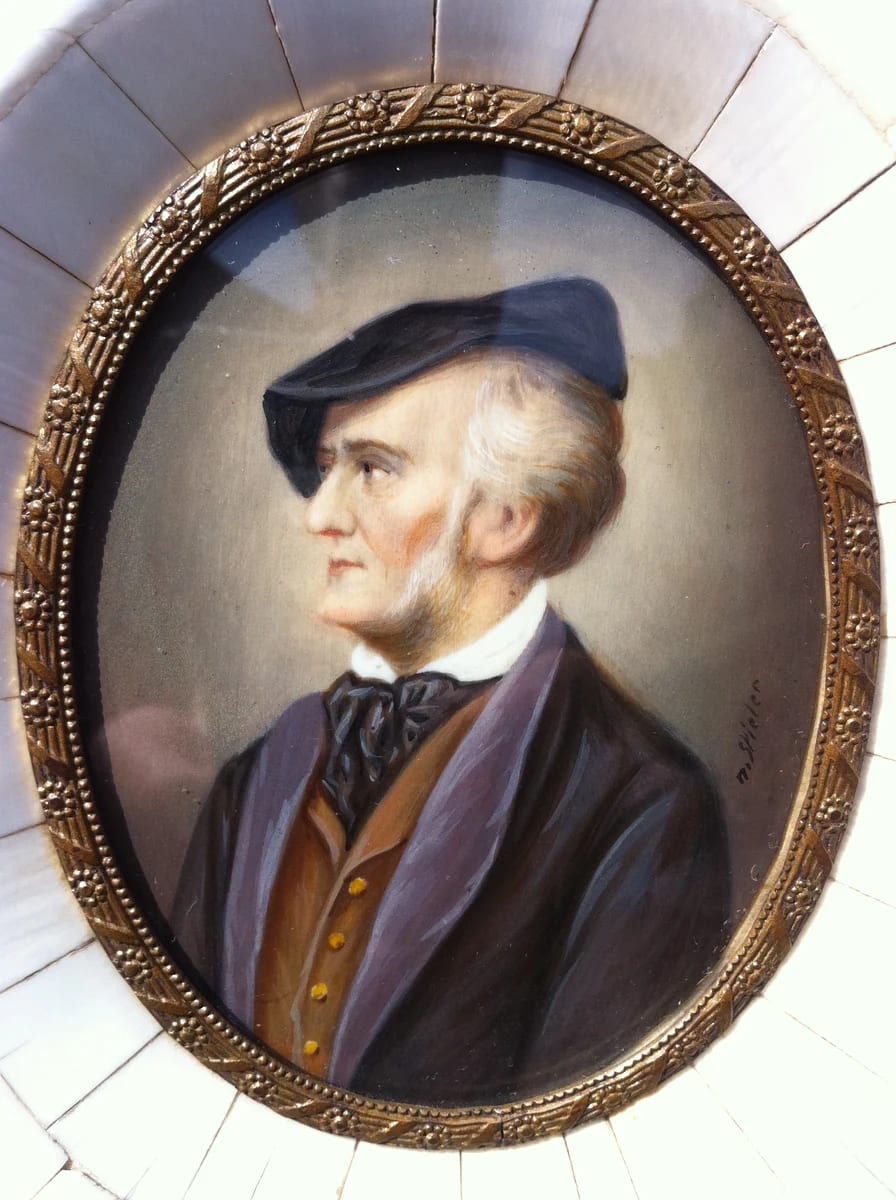
Wagner is one of the most controversial figures in music history. A genius composer who overturned opera; at the same time, a nationalist and antisemite whose ideas influenced German National Socialism. Nonetheless, through music he changed the very meaning of the word “art.”
His Ring of the Nibelung is a roughly 15-hour tetralogy of four operas (Das Rheingold, Die Walküre, Siegfried, Götterdämmerung), performed over four evenings in a theater he built specially for it in Bayreuth. Wagner developed and systematized the leitmotif technique — short melodies tied to characters, objects, and ideas. The opera Tristan und Isolde (1865), with its “Tristan chord,” undermined the tonal system and opened the way to atonality. His influence is felt in Mahler, Debussy, and Schoenberg, and in John Williams's film music (Star Wars is essentially a Wagnerian tetralogy in space).