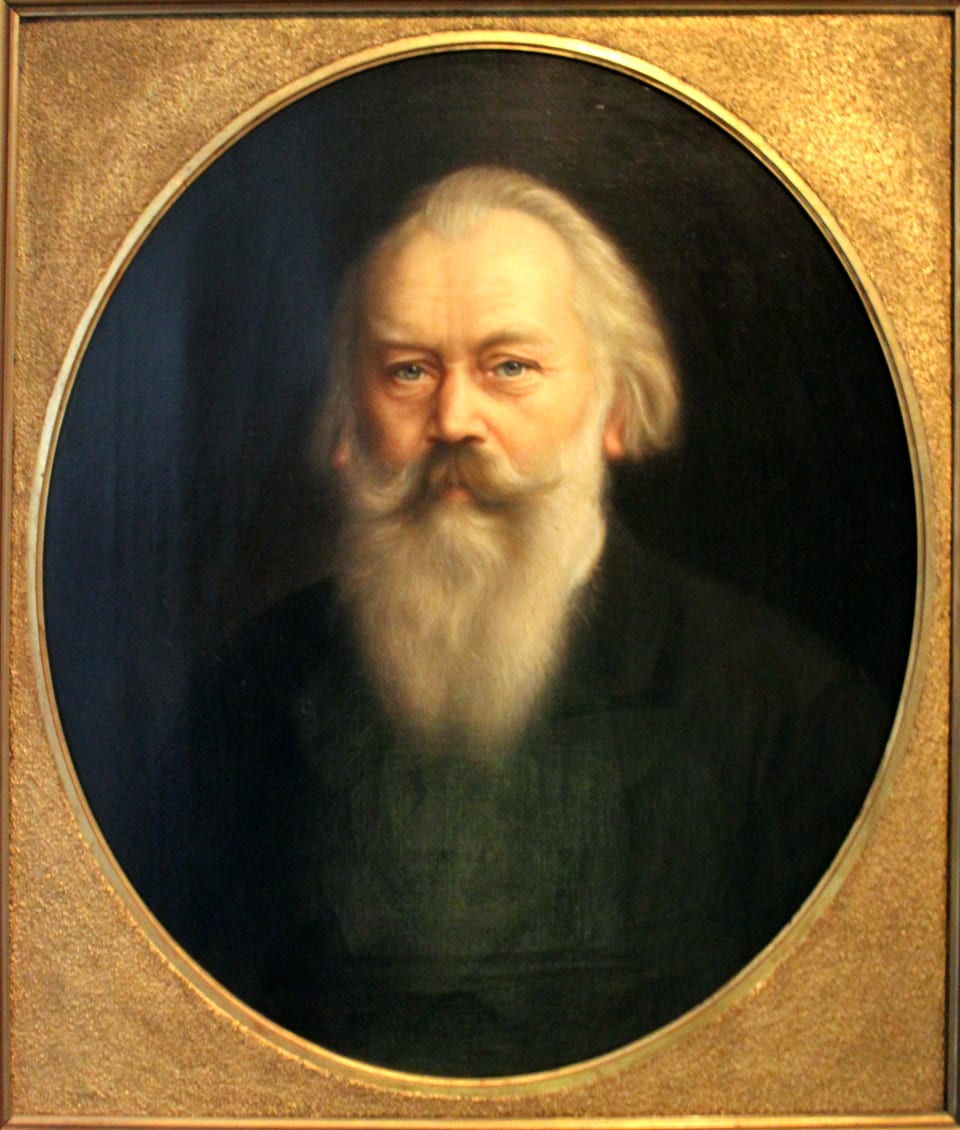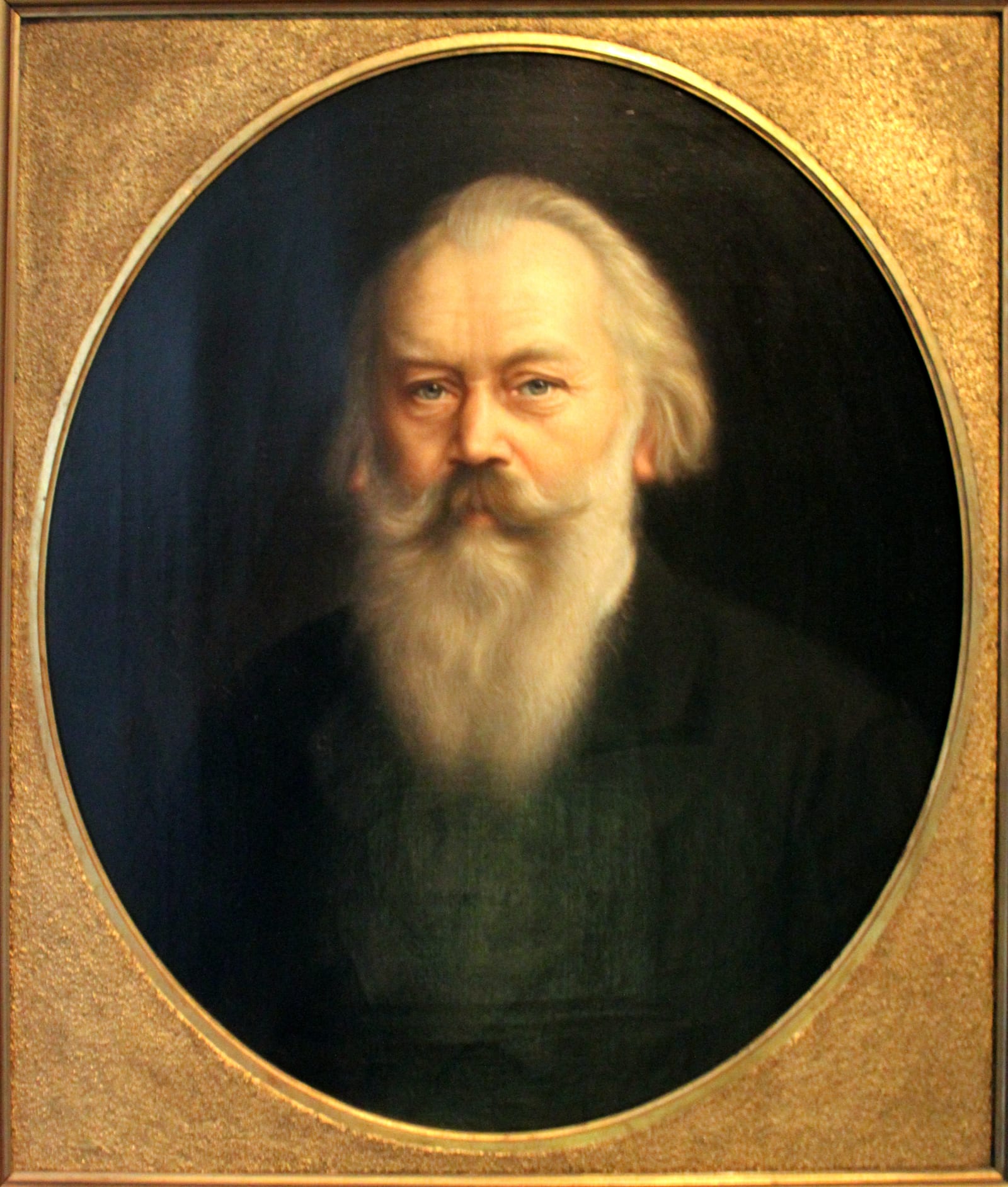
Johannes Brahms is one of the greatest composers of the Romantic era, who united the passion of the new age with the classical rigour of form. He was regarded as the heir to Beethoven: Brahms worked on his First Symphony for over twenty years, afraid he would not withstand comparison with his great predecessor.
Brahms created four monumental symphonies, piano and violin concertos, the “German Requiem,” countless chamber works, art songs, and the “Hungarian Dances.” His music is deep, concentrated, rich in polyphony and warm autumnal lyricism. Together with Bach and Beethoven he is often called one of the “three Bs” of German music. Brahms remained faithful to absolute, “pure” music in an age of programme music and music drama, proving the inexhaustible vitality of the classical forms.